
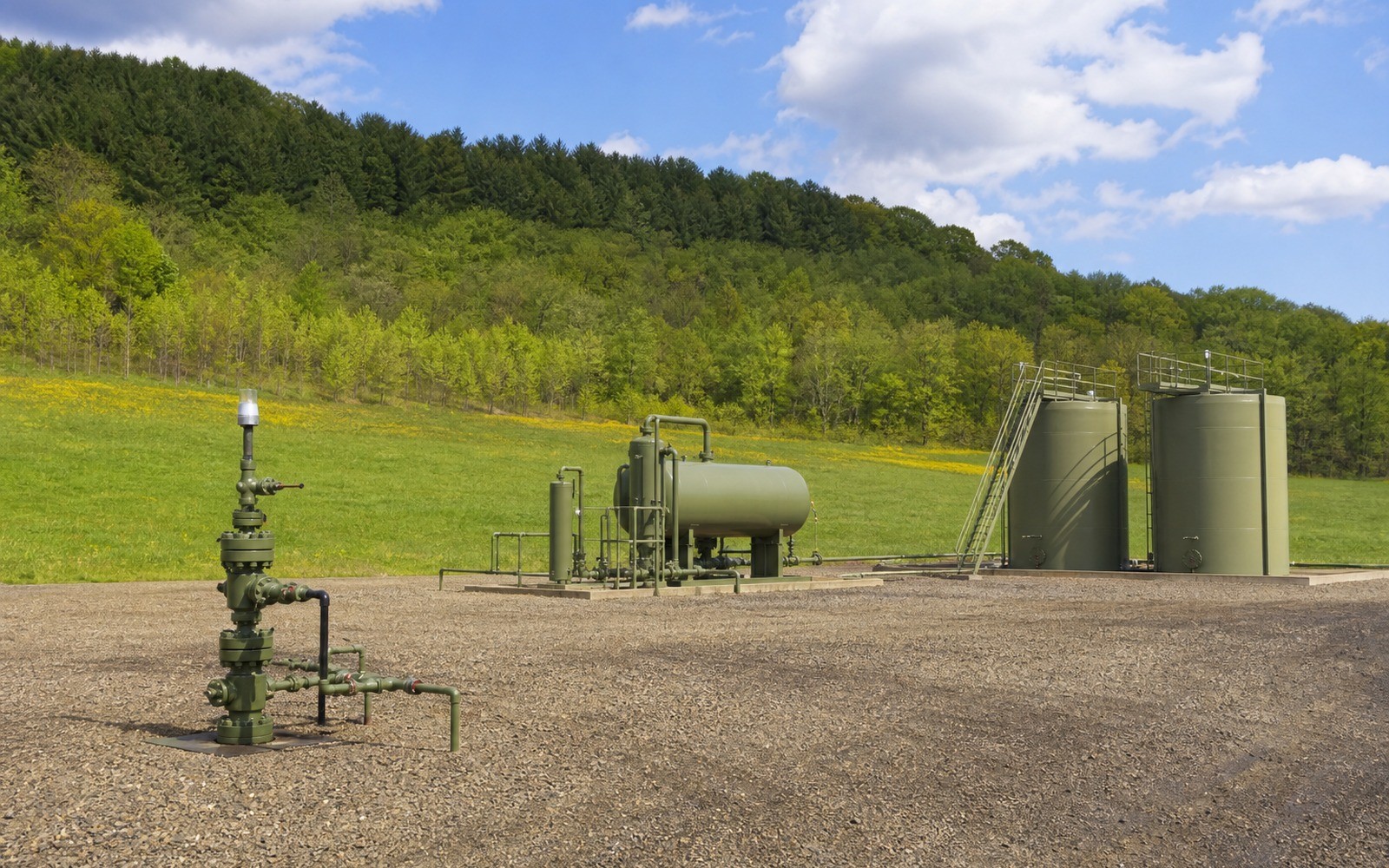
Fayetteville Shale Mineral Rights
The Fayetteville Shale had its moment in the mid-2000s, and most owners we talk to today are holding checks from that same generation of wells, now well into a long, quiet decline.
The Fayetteville Shale sits in the Arkoma Basin across north-central Arkansas, in counties like Van Buren, Cleburne, White, and Conway. It's a dry gas play that had its major development push roughly between 2005 and 2012, and unlike some plays that see a slow trickle of new wells for years afterward, Fayetteville drilling largely stopped when gas prices fell and operators shifted capital to oil-weighted basins. That means most producing Fayetteville wells today are somewhere between ten and twenty years old.
If you hold minerals or royalties here, you're most likely behind a well that's long past its steep early decline and settled into the slower, flatter production that defines a mature gas play's back half.
A boom that ended on a schedule, not a whimper
Unlike basins where drilling gradually tapers off, Fayetteville development largely stopped in a fairly compressed window when low gas prices in the early-to-mid 2010s made it uncompetitive against emerging plays like the Marcellus and Utica. That gives the play an unusually clean age structure — most wells cluster in a roughly seven-year drilling window, which makes production history easier to interpret than in a basin with drilling spread unevenly across decades.
The practical effect for an owner is that there's very little new-drilling story to factor into value here. What you own is what's producing, on a decline curve that's already well documented, without much realistic chance of new wells being added to your unit.
What the decline looks like now
Fayetteville wells had a typical shale-gas decline profile — steep in the first year or two, then flattening into a longer tail. Given how much time has passed since most of these wells were drilled, the interests we evaluate today are almost always well into that flat tail, meaning check size has usually stabilized at a lower, more predictable level compared to the well's early years.
That stability is worth something. A well that's held a roughly consistent, if modest, production rate for the last several years gives us a much clearer basis for valuing your interest than a newer well still working through an uncertain decline.
Reading an Arkoma Basin gas statement
Gathering and compression deductions are standard on Fayetteville statements, and Arkansas assesses its own severance tax that should show up as a separate line. Because this basin has been mature for a while, most owners have seen their deduction structure stay fairly consistent year to year — a sudden jump in deductions without explanation is worth a call to the operator's owner-relations line.
If your check has gone to zero or near-zero on a well that used to pay something, confirm the well hasn't been plugged or shut in rather than assuming it's simply declined to nothing — Arkansas well records through the state's oil and gas commission can confirm current well status.
Why owners in Arkansas sell now
Given how compressed the Fayetteville's drilling window was, a lot of the owners we talk to inherited interests from a parent or grandparent who leased or was already receiving royalties by the early 2010s, and the interest has simply been running quietly since. With little prospect of new drilling reviving the play, converting a small, steady, finite check into a lump sum is often more appealing than continuing to track Arkansas gas royalties for years to come, especially for heirs who don't live in the state.
We also talk to owners consolidating several small Fayetteville interests picked up across different family land parcels, looking to simplify the tax paperwork that comes with tracking multiple small 1099s from Arkansas operators each year.
Owner questions
Questions a Royalty Owner Should Ask
Each answer ties the deposited amount back to the title, lease, unit, well, price, and adjustment records that produced it.
Is the Fayetteville Shale still being drilled today?
Very little new drilling has happened since the early-to-mid 2010s, when low gas prices made the play uncompetitive against other basins. Most producing wells date from the 2005-2012 development window and are now mature.
Why has your Fayetteville gas check gotten smaller over the years?
That reflects the well's normal decline curve, which is typically steep in the first year or two before leveling into a longer, flatter tail. Given how old most Fayetteville wells are now, most interests are well into that flatter stage.
Did the well fail if the royalty check dropped to almost nothing?
It's worth checking the well's current status with the Arkansas Oil and Gas Commission before assuming the worst, since a shut-in or plugged well shows up differently than one that's simply declined further. A call to the operator's owner-relations line can also clarify what happened.
Is a mature Fayetteville interest still worth selling?
Yes — a well with a long, documented decline history is often easier to value accurately than a newer well, and many owners prefer converting a small, steady, finite check into one lump sum rather than continuing to track it for years.
Related royalty reviews
Trace the next line behind the check
Each of these reviews turns on the same statement detail: the owner decimal, the wells behind it, the deductions, and the payor trail.