
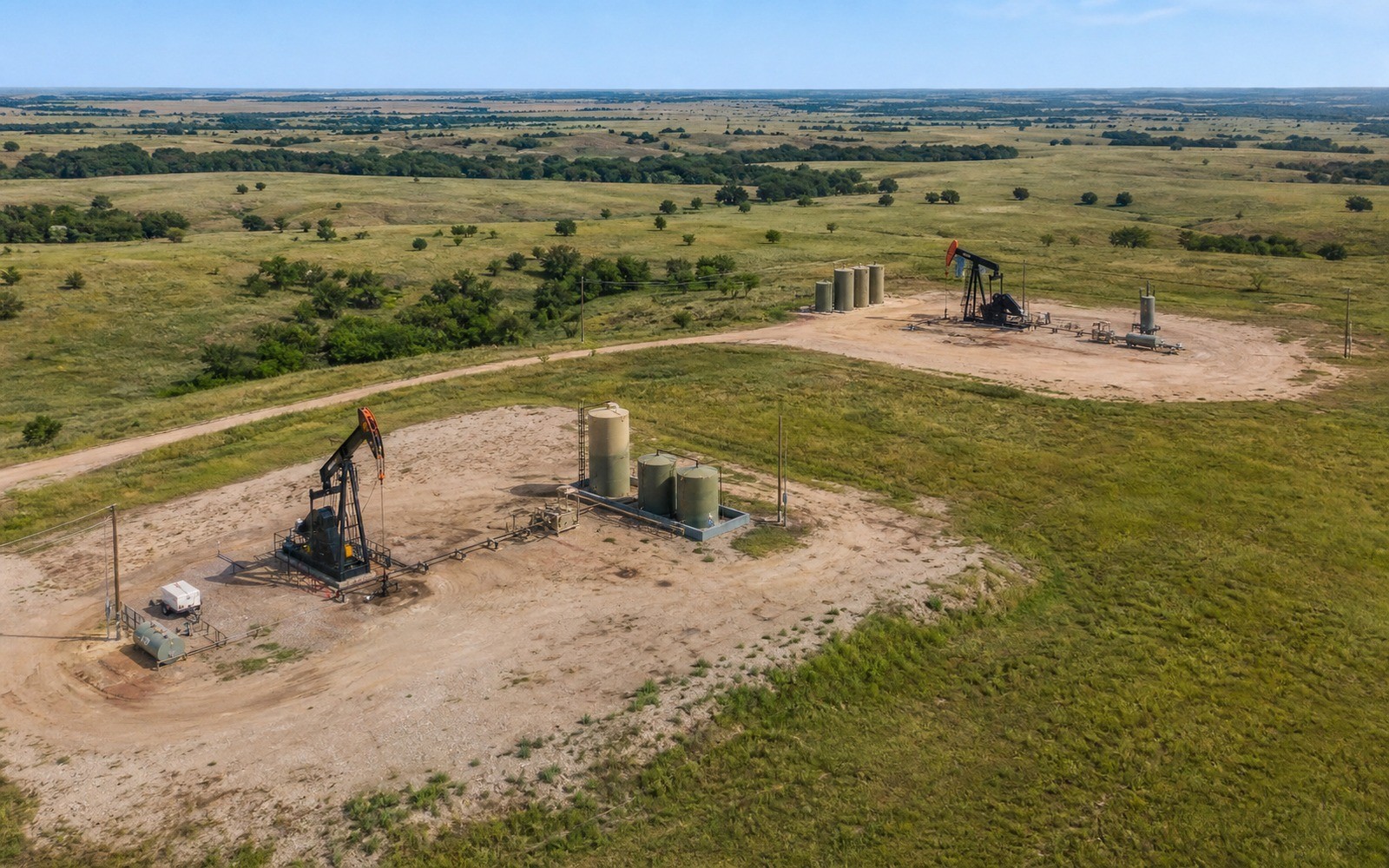
Barnett Shale Mineral Rights
The Barnett was the play that proved shale gas could work, and today most of it is old news in the best possible way for a check owner: mature, flat, and predictable.
The Barnett Shale is where modern horizontal shale drilling essentially got its start in the late 1990s and early 2000s, spreading across the Fort Worth Basin through Tarrant, Denton, Johnson, Wise, and the surrounding counties. It's a gas play, not oil, and it's been developed so thoroughly and for so long that most Barnett wells today are well past their steep early decline and sitting on a mature, flatter production profile.
What makes the Barnett unusual compared to other shale gas plays is how much of it sits under and around a major metro area. Some owners hold minerals under suburban Fort Worth neighborhoods, golf courses, or shopping centers, drilled from pads that were sited to work around dense development — a completely different operating environment than the rural Haynesville or Marcellus.
Where a Barnett well sits on its decline today
Because the Barnett boom peaked well over a decade ago, very few wells in this play are still in their steep early decline phase — most are on the long, gradual tail that follows. That's actually a point in favor of an existing Barnett interest: the volatility has largely worked itself out, and what's left is a well with an established, well-documented history rather than a projection. If your checks have been roughly steady for the last few years, that stability itself is part of the value.
Where owners run into trouble is assuming a Barnett well behaves like a newer shale play elsewhere. Low natural gas prices hit mature gas basins like the Barnett harder than oil-weighted plays, because there's less liquids revenue to cushion the swings, so your check size tracks Henry Hub pricing pretty closely.
Urban and suburban lease realities
A meaningful chunk of Barnett production comes from pad sites drilled in populated areas under city gas-drilling ordinances that limited setbacks, hours, and pad density. That history sometimes means your lease has unusual surface-use or pooling language compared to a rural lease, and it's worth having your division order and lease pulled up when you talk to a buyer rather than relying on memory of the terms.
It also means some Barnett units were drilled later or differently than the surrounding rural counties because of permitting friction, so two owners a few miles apart under different city jurisdictions can have very different well histories even though they're in the same formation.
What to check on your gas statement
Gathering and compression deductions are standard on Barnett statements, since the gas moves through a dense midstream network built up over two decades of development in this basin. Compare your deduction line against your lease's post-production cost language — a lot of Barnett leases were signed in the early-to-mid 2000s boom, and terms vary widely depending on who was negotiating and how competitive that particular lease round was.
Also confirm which wells and units your check ties to if you hold interests across several sections — Barnett owners with older, broad mineral positions sometimes have interests spread across dozens of small allocations, each with its own tiny line item, which is worth consolidating into a single clear accounting even before you think about a sale.
Why owners sell Barnett interests now
Because the play is mature, there's very little active new drilling to bet on, so most owners we talk to are less interested in upside and more interested in converting a long, flat, low-volatility gas check into a lump sum today. That's a reasonable trade for someone who inherited a Barnett interest, has held it for a decade or more already, and doesn't want to keep tracking Fort Worth Basin gas pricing for another twenty years.
We also see owners with several small Barnett interests picked up or inherited from different sources over the years, looking to simplify. Because the play is so well documented at this point, valuation tends to be more straightforward here than in newer plays — the history speaks for itself.
Owner questions
Questions a Royalty Owner Should Ask
Each answer ties the deposited amount back to the title, lease, unit, well, price, and adjustment records that produced it.
Is the Barnett Shale still being actively drilled?
Very little new drilling happens in the Barnett today compared to the 2005-2012 boom years. Most producing wells are mature and on a flat decline, so an existing interest is valued mainly on that production history rather than nearby development potential.
Why does your Barnett gas check move so much with natural gas prices?
The Barnett is a dry gas play with limited liquids revenue to cushion price swings, so your check tracks Henry Hub and regional gas pricing fairly closely. That's normal for a mature gas-only basin like this one.
Does drilling under a city change how your lease works?
It can. A lot of Barnett wells were drilled under municipal gas ordinances with specific setback and pooling requirements, which sometimes shaped unusual lease terms compared to a rural lease. It's worth having your division order in hand when discussing your interest.
Is an old, mature Barnett interest still worth selling?
Yes — mature doesn't mean worthless, it means predictable. A well-documented flat decline is actually easier to value accurately than a newer well with less history, and many owners prefer converting that steady tail into a lump sum.
Related royalty reviews
Trace the next line behind the check
Each of these reviews turns on the same statement detail: the owner decimal, the wells behind it, the deductions, and the payor trail.