Antrim Shale Mineral Rights
Antrim Shale wells are some of the oldest, shallowest, and quietest producers in the country, and most of the owners behind them have been cashing small checks for so long they've stopped thinking about what the interest is worth.
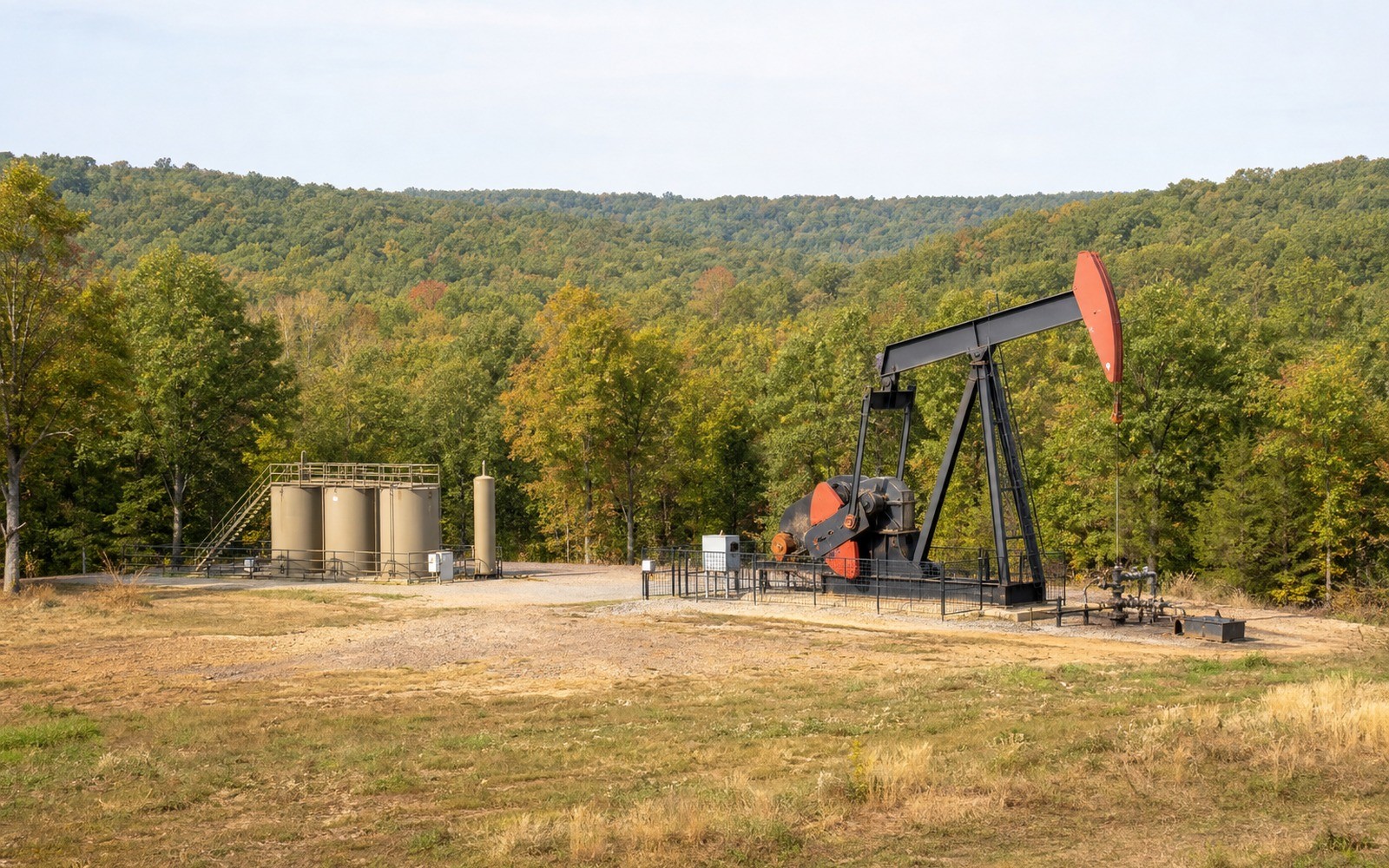
The Antrim Shale in northern Michigan's Michigan Basin is a different animal from almost every other shale play in the country. It's a biogenic gas play, meaning the gas was generated by bacteria at shallow depth rather than cooked out of the rock by heat and pressure over geologic time the way thermogenic gas is in the Marcellus or Haynesville. Wells are shallow, often under 2,000 feet, drilled mostly in the 1980s and 1990s, and dewatered before they'll flow gas at any real rate.
If you hold a royalty or mineral interest in Antrim country — Otsego, Antrim, Montmorency, Otsego and the surrounding counties — you're most likely looking at a well that's been on production for two or three decades already, past its peak, sitting on a long, low, dependable tail.
Why the checks are small but stubborn
Antrim wells were never big producers to begin with. Initial rates were modest compared to a deep thermogenic gas well, and by now, decades into production, most of these wells are producing at a fraction of their original rate. What makes them worth paying attention to is how flat that decline has become. A well that's been dewatered and stabilized for twenty years tends to keep producing at roughly the same low rate for years longer, rather than falling off a cliff. That's the opposite decline profile from a shale oil well, and it's why an Antrim interest that looks unimpressive on a monthly statement can still add up to real value over the years it has left.
The tradeoff is that almost nobody is drilling new Antrim wells today. There's very little offset development to point to, so the value case for an Antrim interest rests almost entirely on the existing well's production history and remaining reserves, not on any story about future drilling.
What to check on an Antrim statement
Dewatering costs used to be a bigger deduction on Antrim wells than they are now that most are past the heavy water-handling phase, but it's still worth checking whether your statement lists a water disposal or lifting cost deduction. Because these are old wells, some are still operated under legacy division orders that haven't been updated in years — if you've had a name change, moved, or inherited the interest from a relative, confirm the operator has your current address and that payments haven't been suspended for a title issue you don't know about.
Unclaimed or suspended royalties are more common on old Antrim wells than on newer plays, simply because so much time has passed and so many original owners have passed the interest down without updating paperwork. If your checks stopped without explanation, that's worth chasing before you consider a sale, since it may mean money is sitting in suspense with your name on it.
Ownership patterns in Michigan Basin gas country
A lot of Antrim interests trace back to leases signed by farm families in the 1980s gas boom, land that's stayed in the family since — sometimes divided among children and grandchildren who never lived in Michigan and don't track the well the way the original owner did. It's common for us to talk to an heir in another state who inherited a fractional interest, gets a check every quarter for $30 or $60, and has no real sense of what the underlying reserves or remaining life are worth as a lump sum.
We also hear from owners managing several small Antrim interests across different wells and townships, each with its own tiny check and its own 1099 at tax time. Consolidating that paperwork into one payment is often as much the appeal as the number itself.
How we value an old, flat Antrim interest
For a well this far into its life, we weight production history heavily — a stable, well-documented decline curve over ten or twenty years tells us far more than any type curve would, because there's no meaningful new-drilling variable to model. We'll ask for your most recent statements and, if available, the well's full production history from the state, and price the remaining reserves against current gas pricing, not a hoped-for future price.
Because these are legacy assets with a long, low tail rather than a growth story, offers reflect that steady, modest, and finite production — not a bet on new wells being drilled nearby.
Owner questions
Questions a Royalty Owner Should Ask
Each answer ties the deposited amount back to the title, lease, unit, well, price, and adjustment records that produced it.
Are Antrim Shale wells still being drilled?
Very little new Antrim drilling happens today. Almost all producing Antrim wells were drilled in the 1980s and 1990s, so the value of an existing interest depends on the remaining life of the current well rather than any nearby development.
Why did your Antrim royalty check stop or drop suddenly?
Old wells sometimes get shut in for mechanical issues, or payments get suspended over a title or heirship question that was never resolved. It's worth calling the operator's owner-relations line to check on suspense status before assuming the well simply quit.
Is a small Antrim interest worth selling if the check is only $30-60 a month?
It can be, especially if the well has years of remaining life and you'd rather have the value in a lump sum than in small recurring checks. We evaluate based on the production history and remaining reserves, not the size of a single month's check.
How do biogenic Antrim wells decline differently from shale oil wells?
Antrim gas decline is generally slow and flat once the well has been dewatered and stabilized, unlike the steep early decline typical of unconventional oil wells. That flatter curve is part of what still gives an old Antrim interest value decades in.
Related royalty reviews
Trace the next line behind the check
Each of these reviews turns on the same statement detail: the owner decimal, the wells behind it, the deductions, and the payor trail.